- September 24, 2026
- Debbie Hall
Design has spent the better part of a decade playing it safe, favoring neutral walls and quiet palettes in rooms built to photograph well without saying much.
That era is ending, and I just finished the project that proves it.
The whole house was meant to feel collected over decades, the way an actual English cottage does, not assembled in a weekend from one showroom’s inventory. Somewhere along the way, I started calling it the Hobbit House, and the name stuck.
Every room told its own story, with its own wallpaper and its own color palette, and the one rule tying it all together was that nothing in the house was allowed to lean on white to get there.
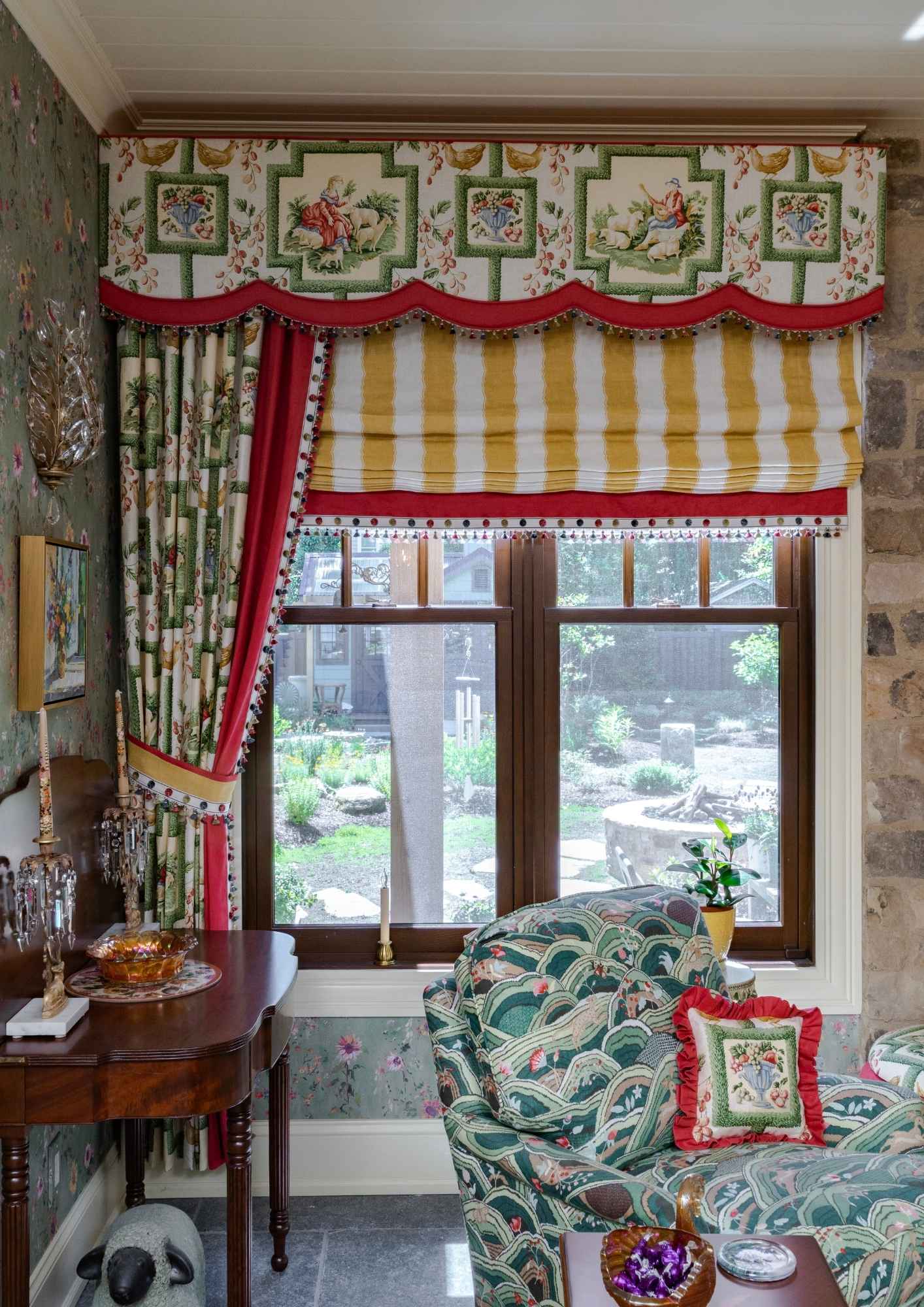
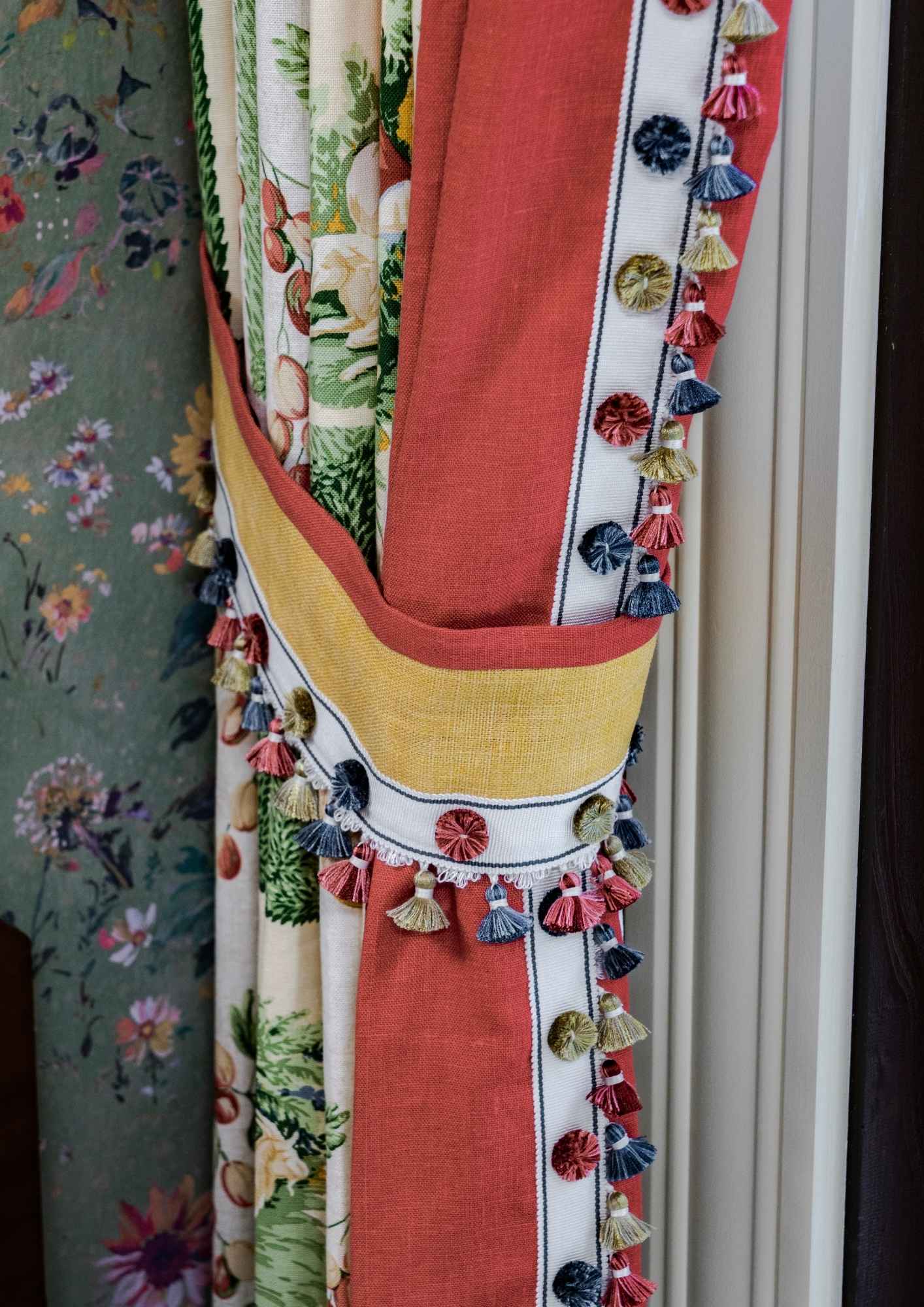
I’ve worked in plenty of homes where a single neutral hue ran wall to wall without anyone questioning it. This was not that house.
Design Playdates, Not Meetings
Linda Rubino, the interior designer behind this project, and I have worked alongside each other for close to twenty five years now. Together, we worked directly with the homeowner on this project, who had an eye for exactly how she wanted each space to look and feel.
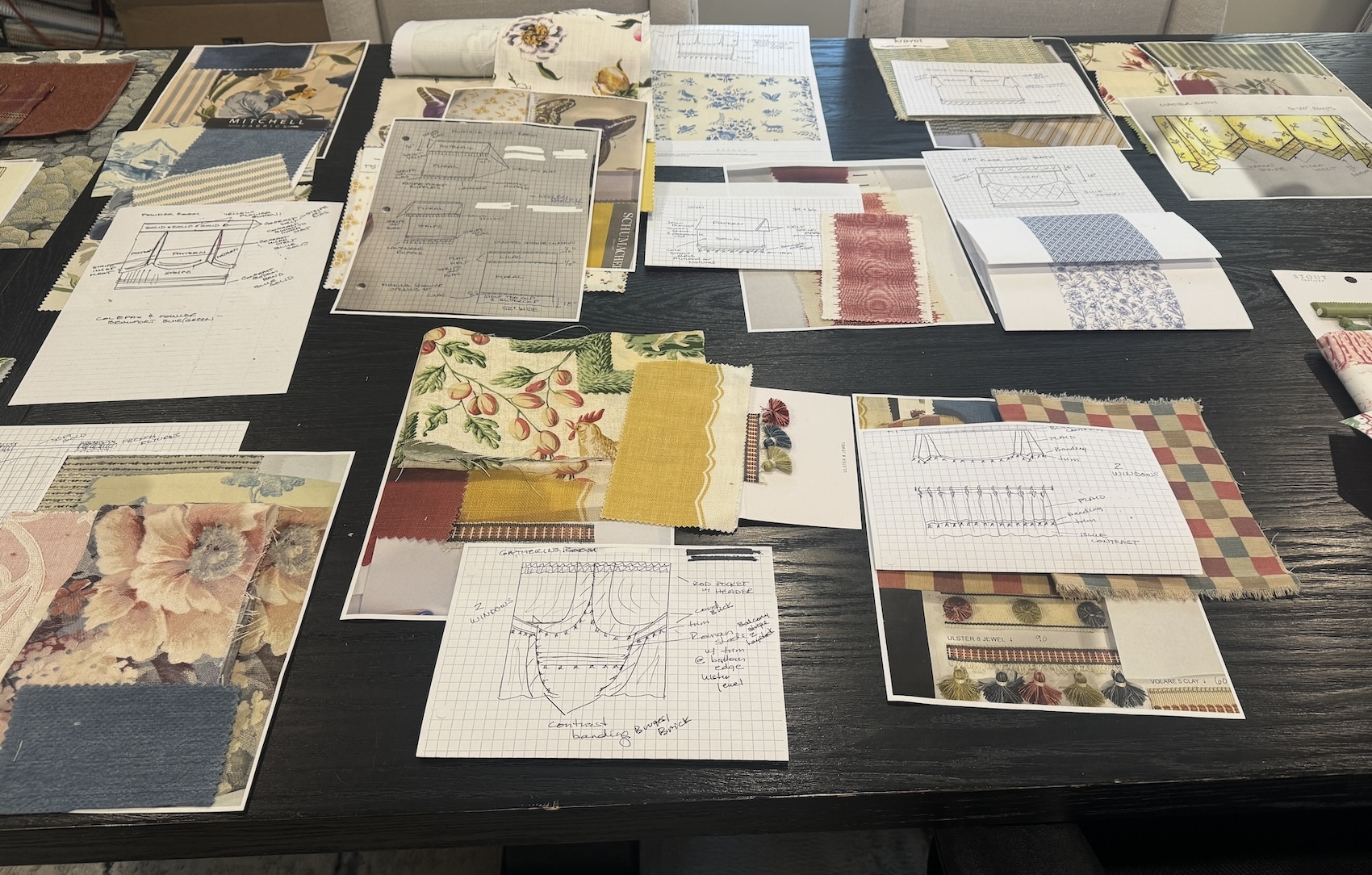
The three of us met roughly every three weeks for close to a year while the house went up around us. Some rooms clicked on the first pass. Others we reworked two or three times, standing in a half-finished space with fabric swatches taped to bare drywall, trying to figure out if the green we’d picked for the trim actually held up next to the wallpaper sample that had just arrived.
Those meetings never felt like work to me, even though they very much were. Real planning, real revisions, real decisions made over fabric spread across a dining table.
Pattern Mixing, Layer by Layer
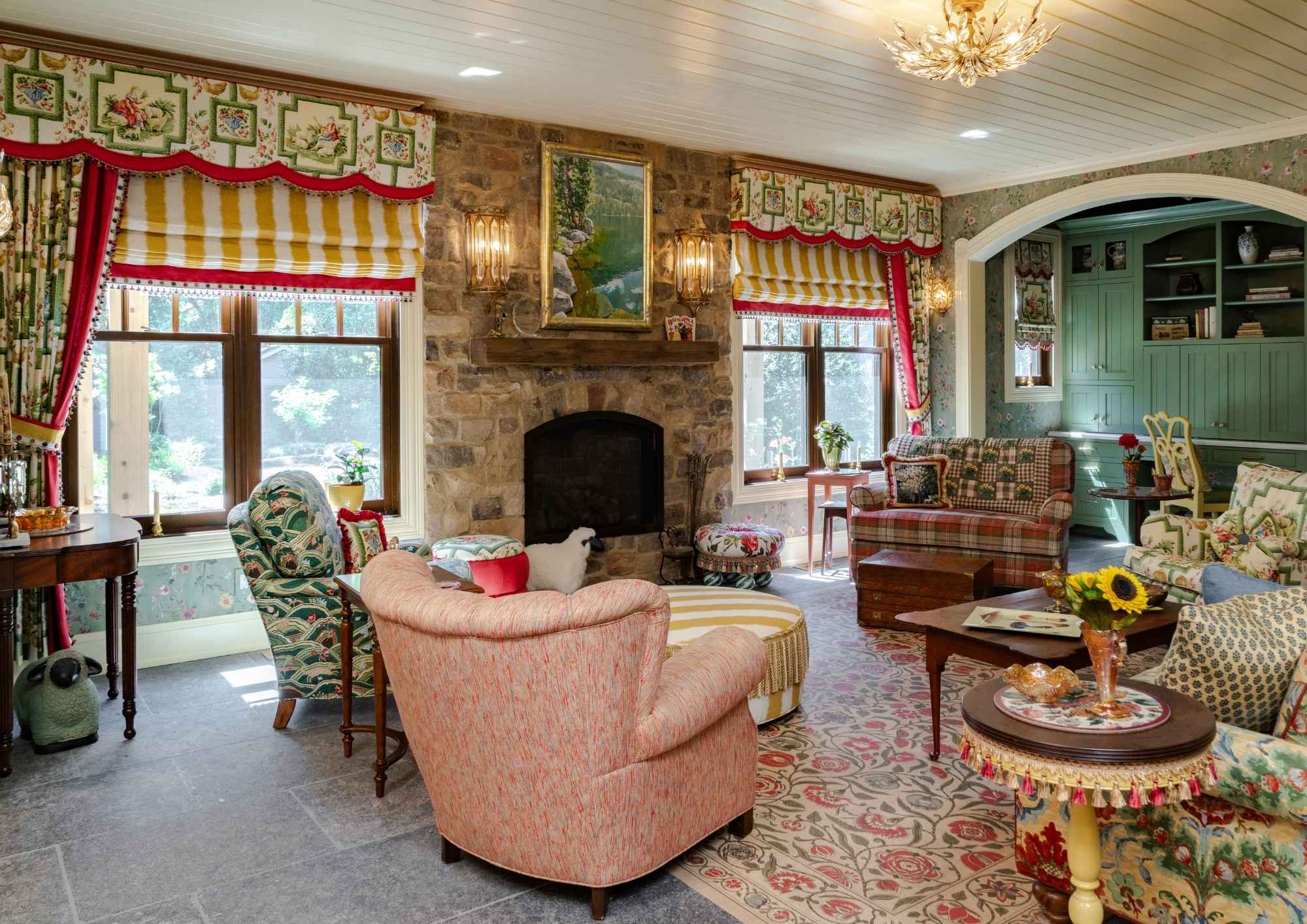
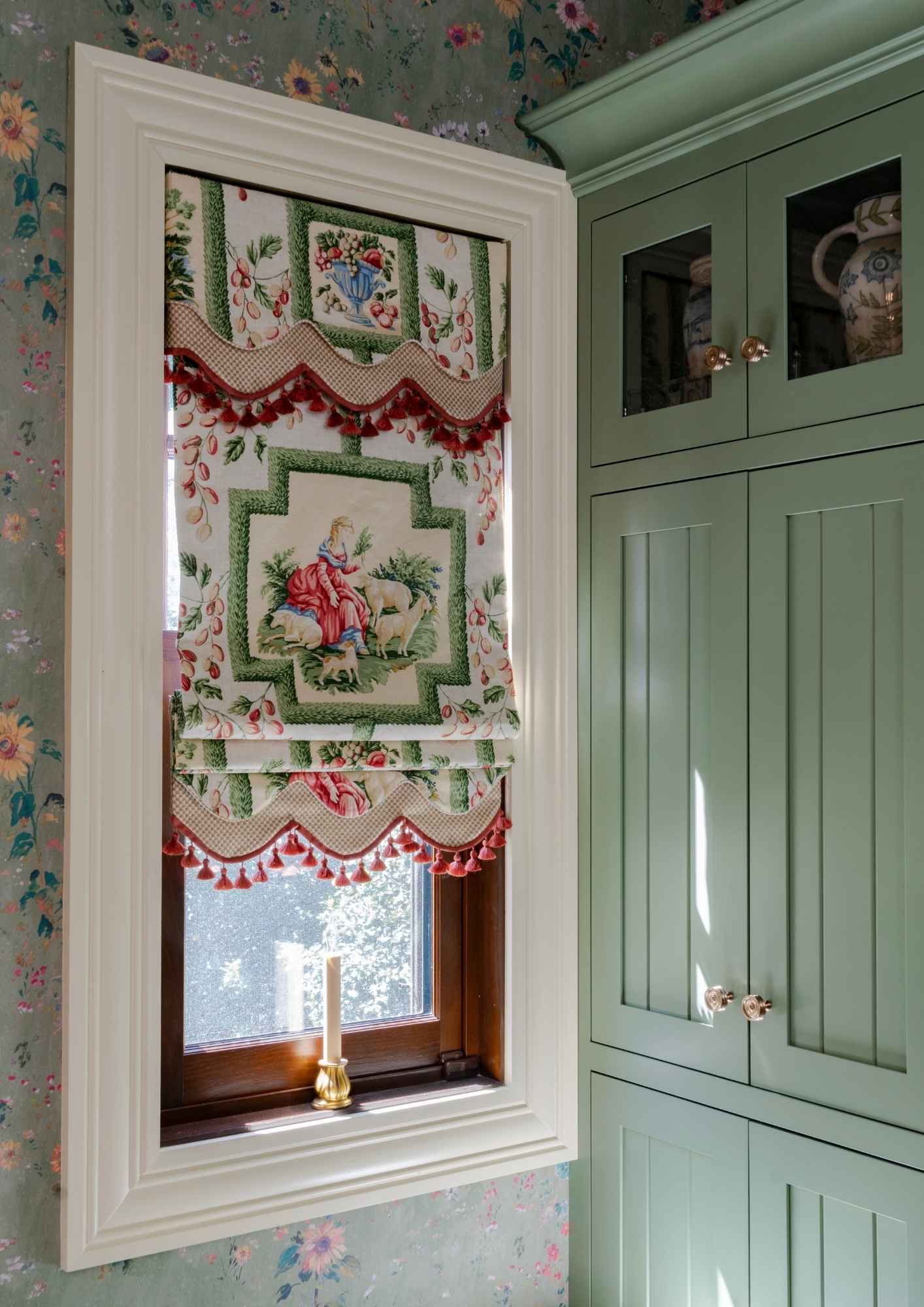
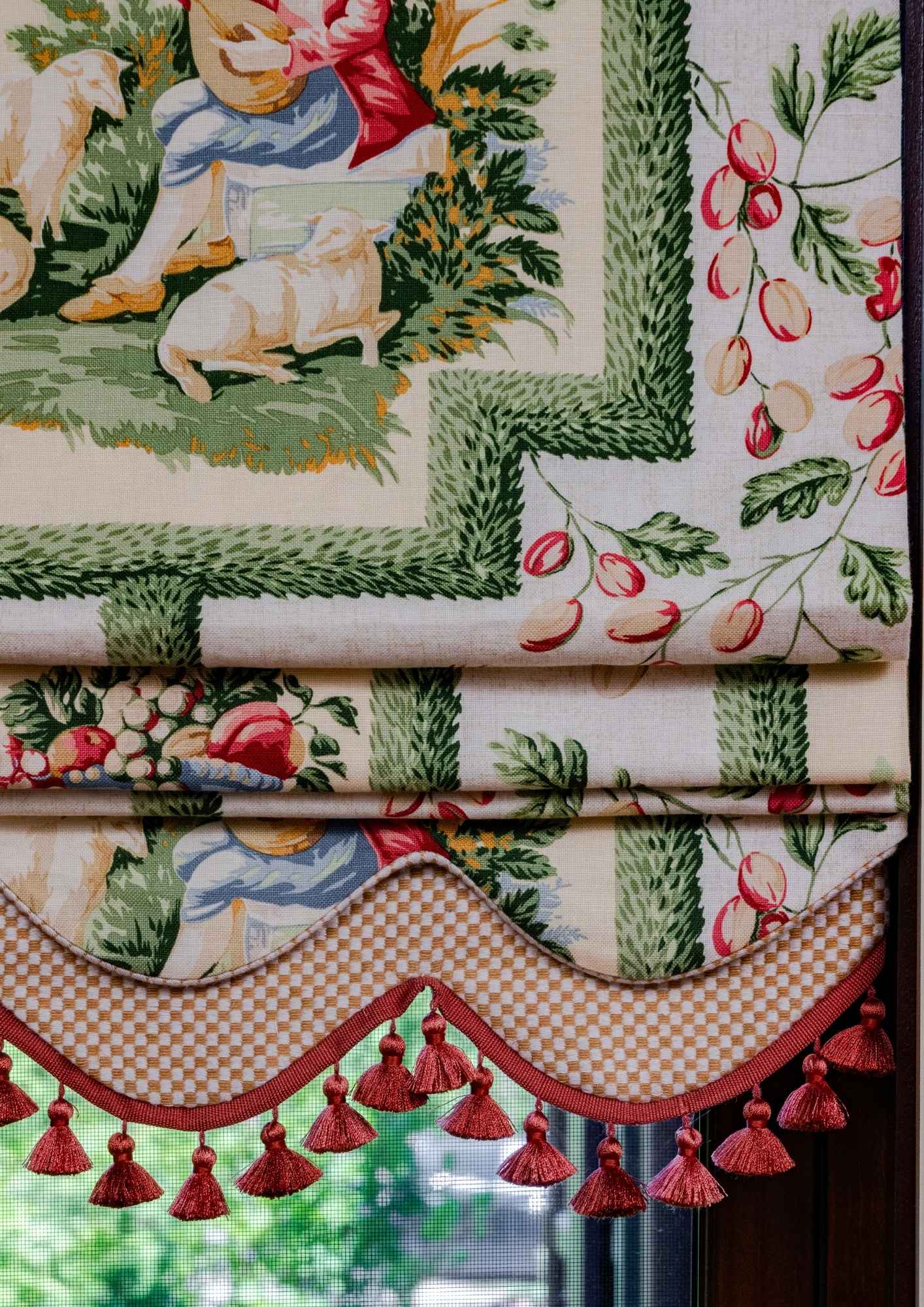
Here’s where this project really got to show off. Maximalist design isn’t just about picking one big print and calling it done. It’s about how many patterns can sit in the same room, and even the same window, without fighting each other, and that’s the real skill behind pattern mixing.
Nearly every window in this house carries three full layers. A custom Roman shade sits closest to the glass for privacy. Over that, a drapery panel or valance, sometimes both, adds more pattern and texture.
Trim and welt finish the leading edges, often in another print entirely, chosen to pull a color forward from the wallpaper or tie two patterns together that wouldn’t otherwise speak to each other. Most windows end up carrying five or six coordinating fabrics and trims once you count all three layers, and none of them use the same fabric twice.
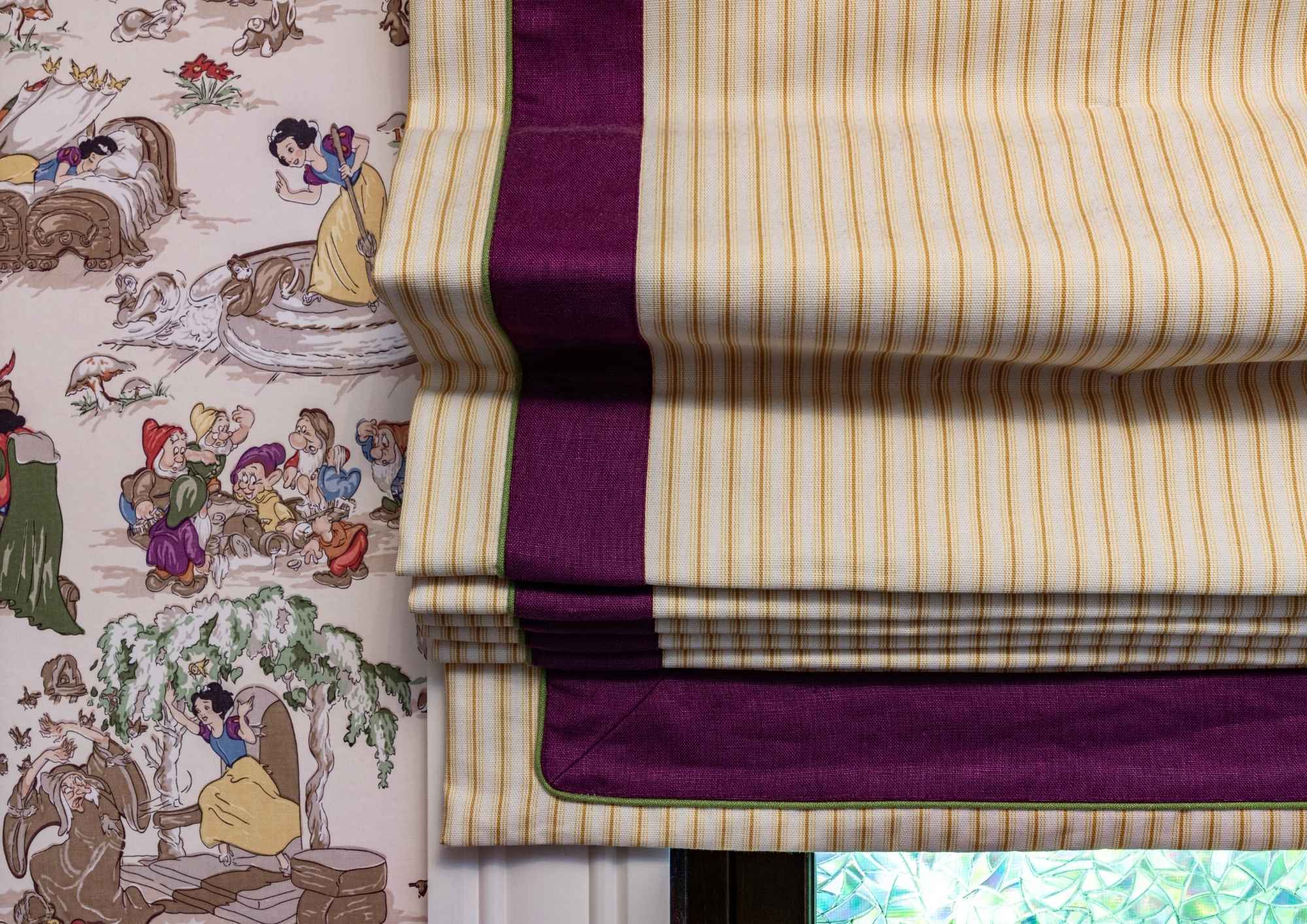
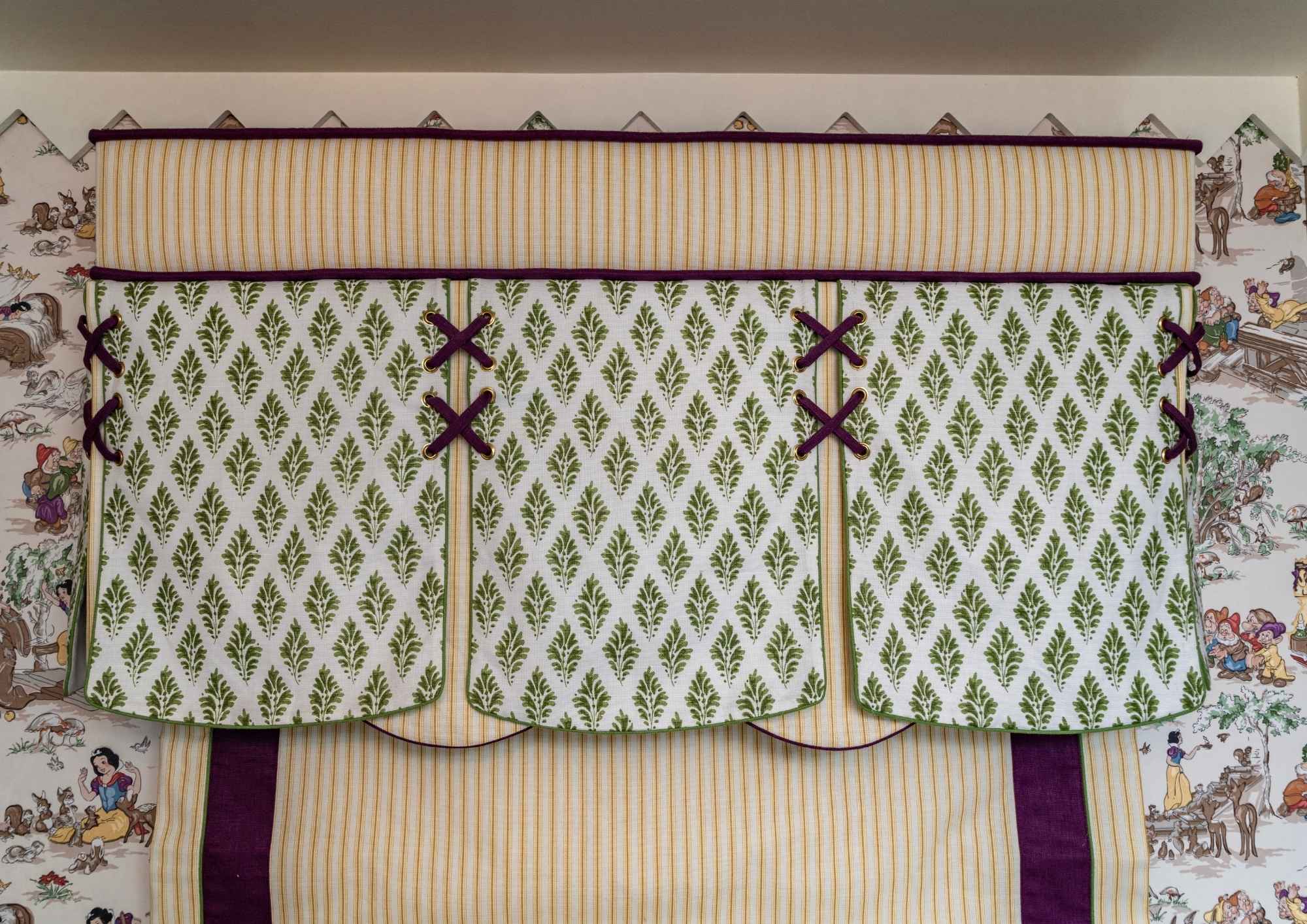
That’s the part people don’t expect. Layering this many patterns doesn’t happen by throwing pretty fabrics at a window and hoping for the best.
Every trim has to answer a question the fabric next to it just asked. A stripe needs a solid or a small print to rest against, never another stripe. A large-scale floral wants a supporting trim in a color it already contains, not a brand new color competing for attention.
Get that math right and a window can hold six fabrics and still feel calm. Get it wrong and even two fabrics will look chaotic.
What Happened Off the Windows
I got to stretch well past window treatments on this one. Custom bedding throughout the house, cushions and custom pillows for the kitchen banquette, three custom shower curtains finished with their own trim and banding.
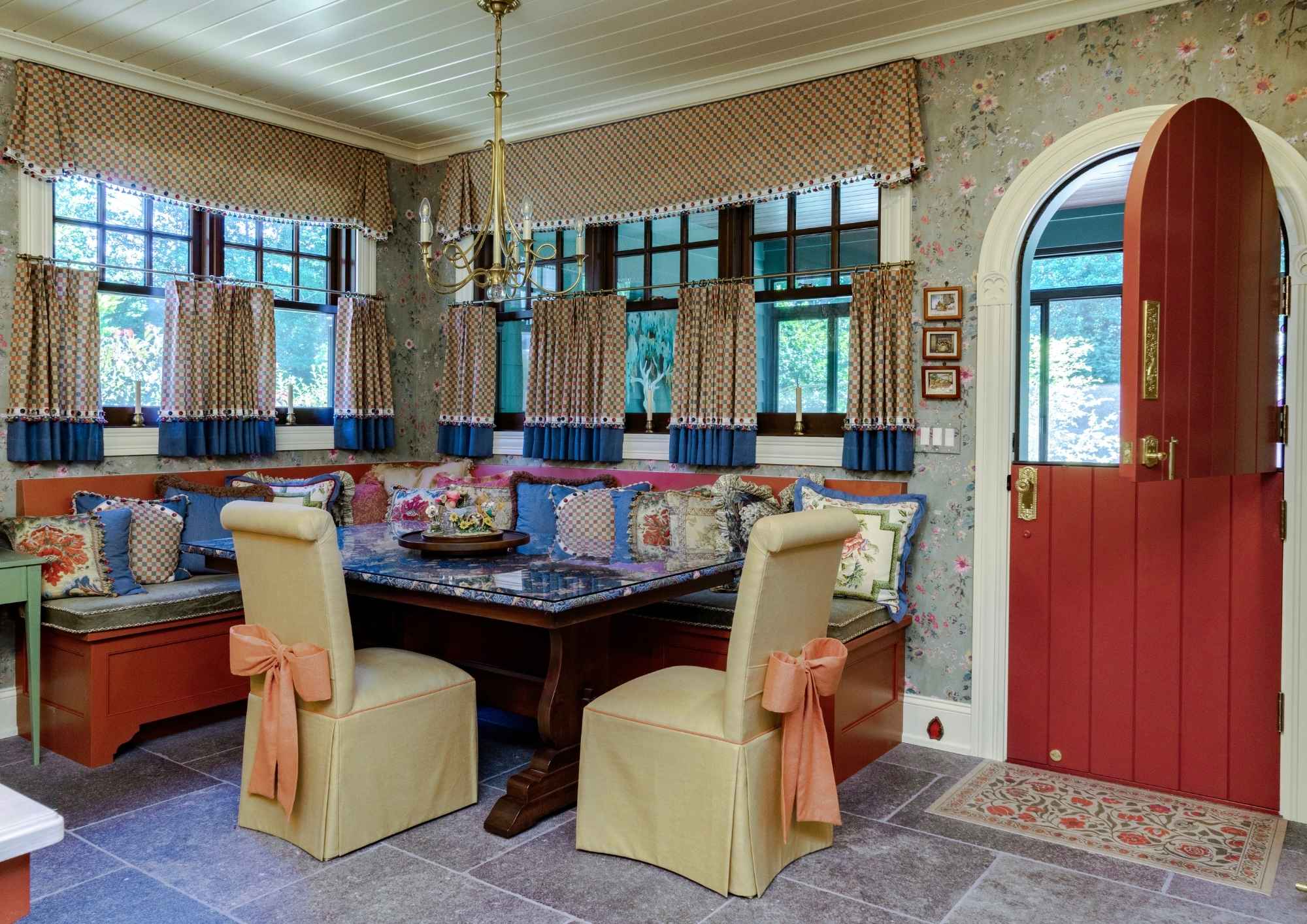
Not all of that was part of the original window treatment plan. But a house built with this much personality tends to spread past the windowsill, and this client welcomed every bit of it.
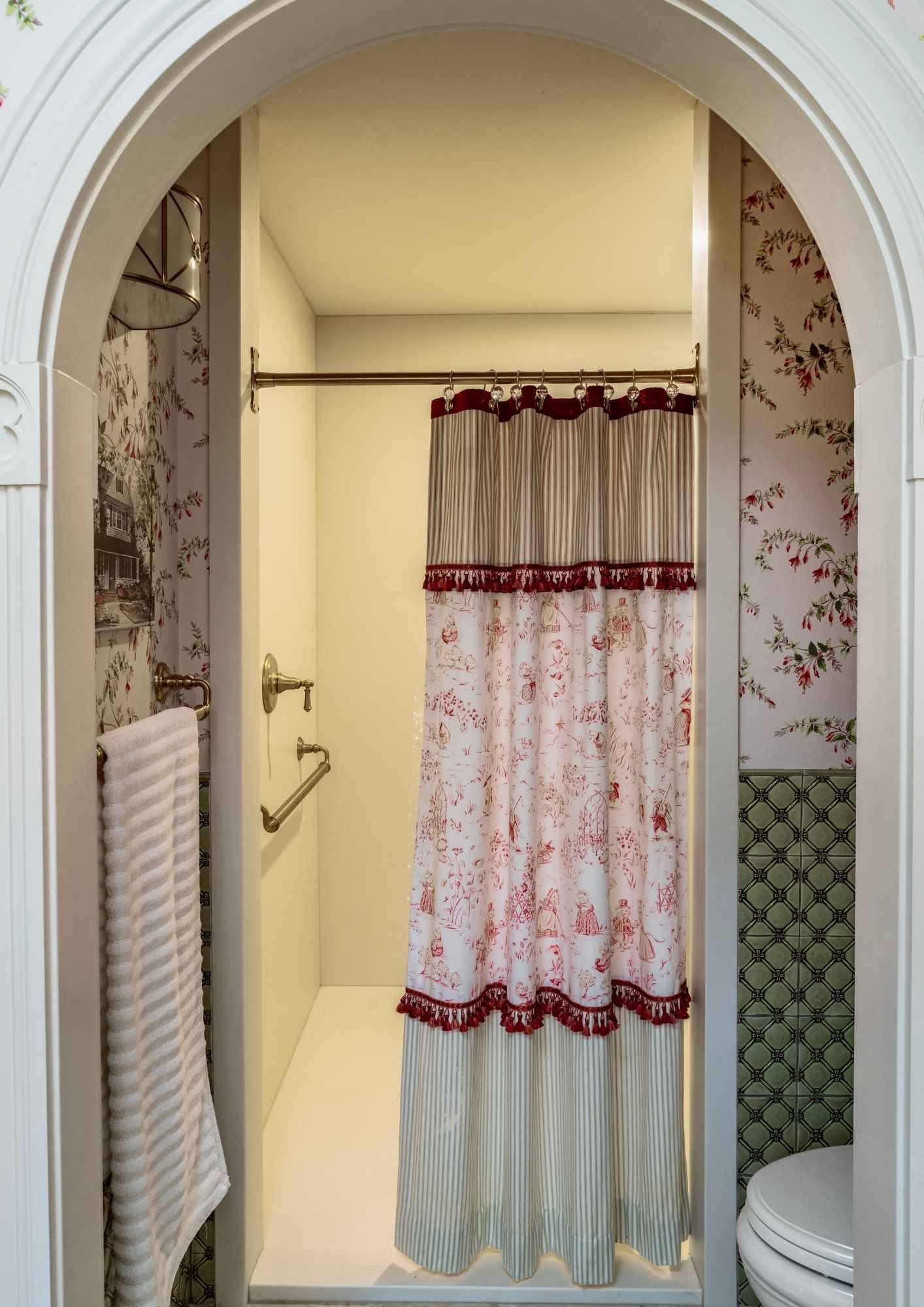
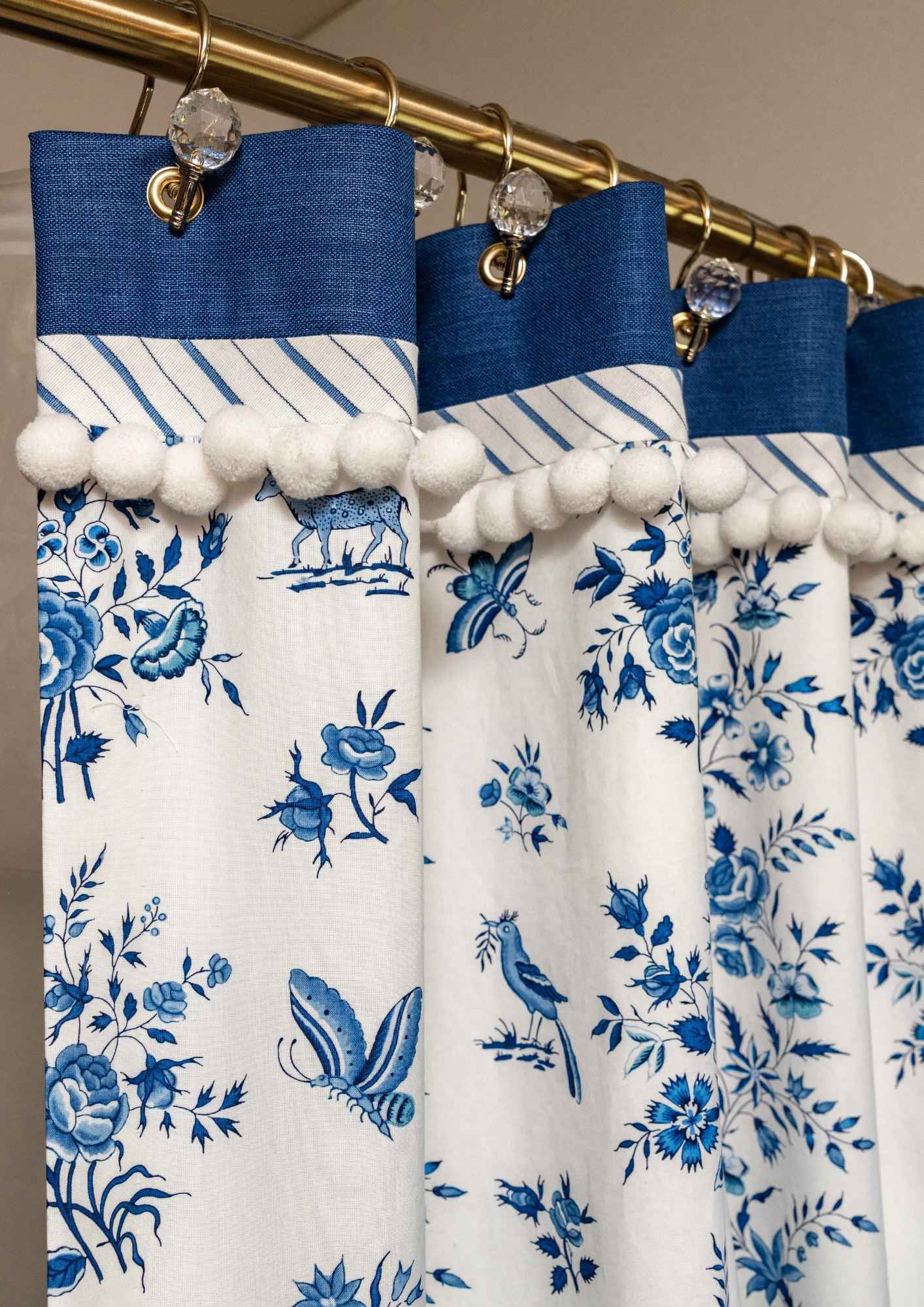
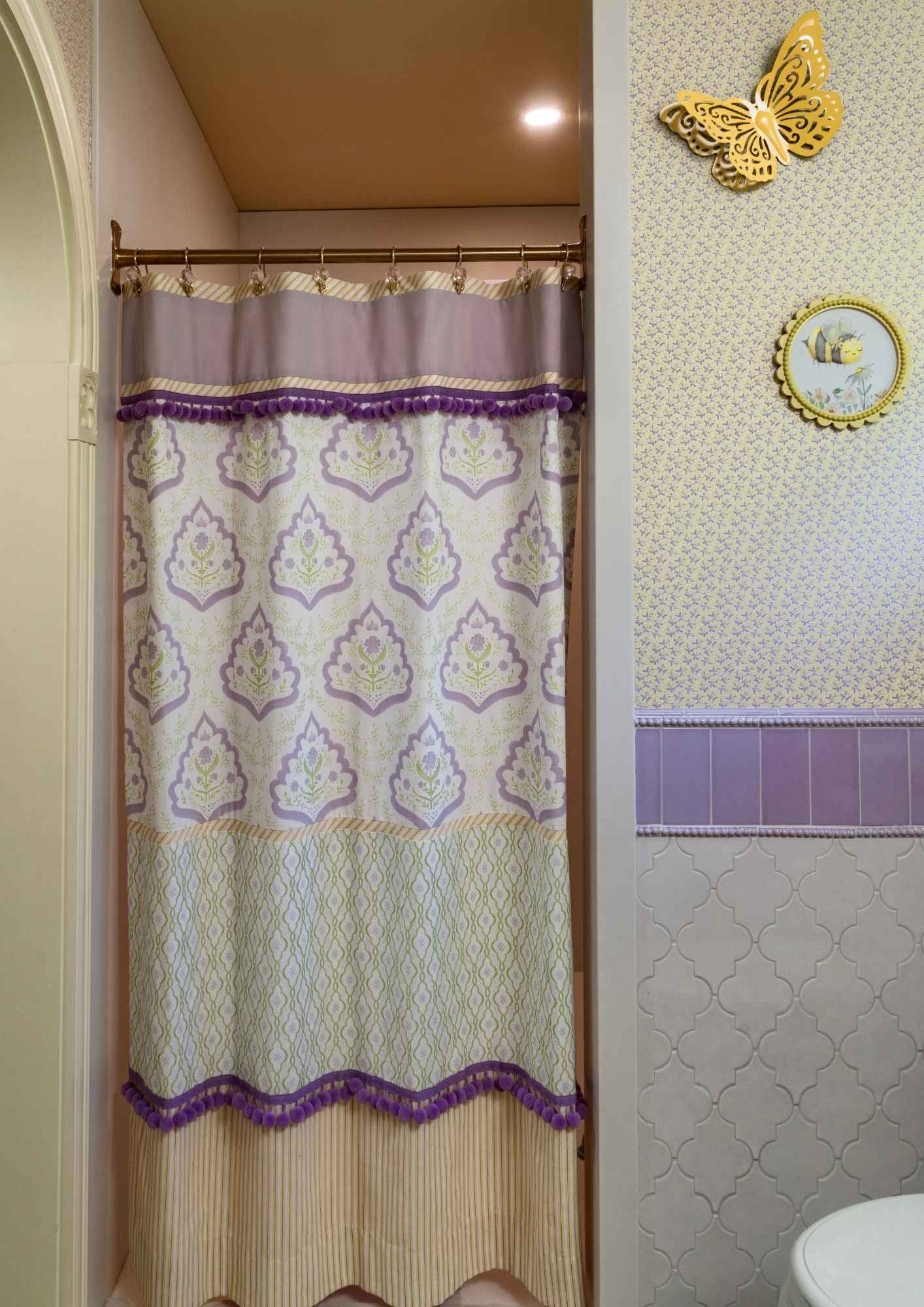
A House That Bets Against the Trend
This house went bold on purpose, and I think it’s arriving at exactly the right moment. More of my clients are asking for pattern and color again, for rooms that actually tell you something about the people living in them.
But a house this layered only works if the craftsmanship underneath it is doing its job. Fabric has to be cut and matched on the same measure across a room so patterns line up walking from one window to the next. Trim gets mitered at every corner instead of simply folded over. Welt has to be pressed tight before it’s ever stitched into a seam, because a soft, uneven welt shows the moment daylight hits it.
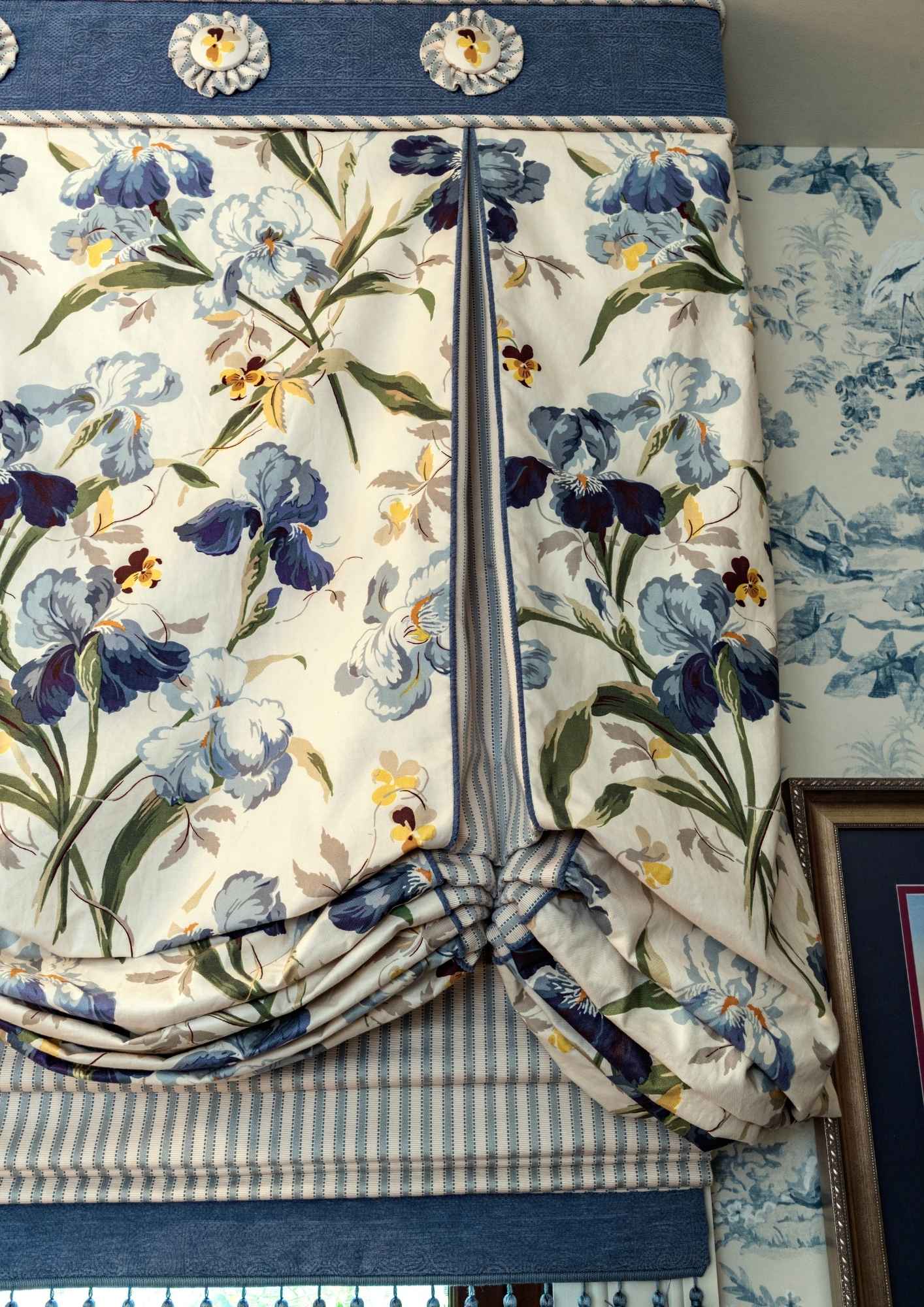
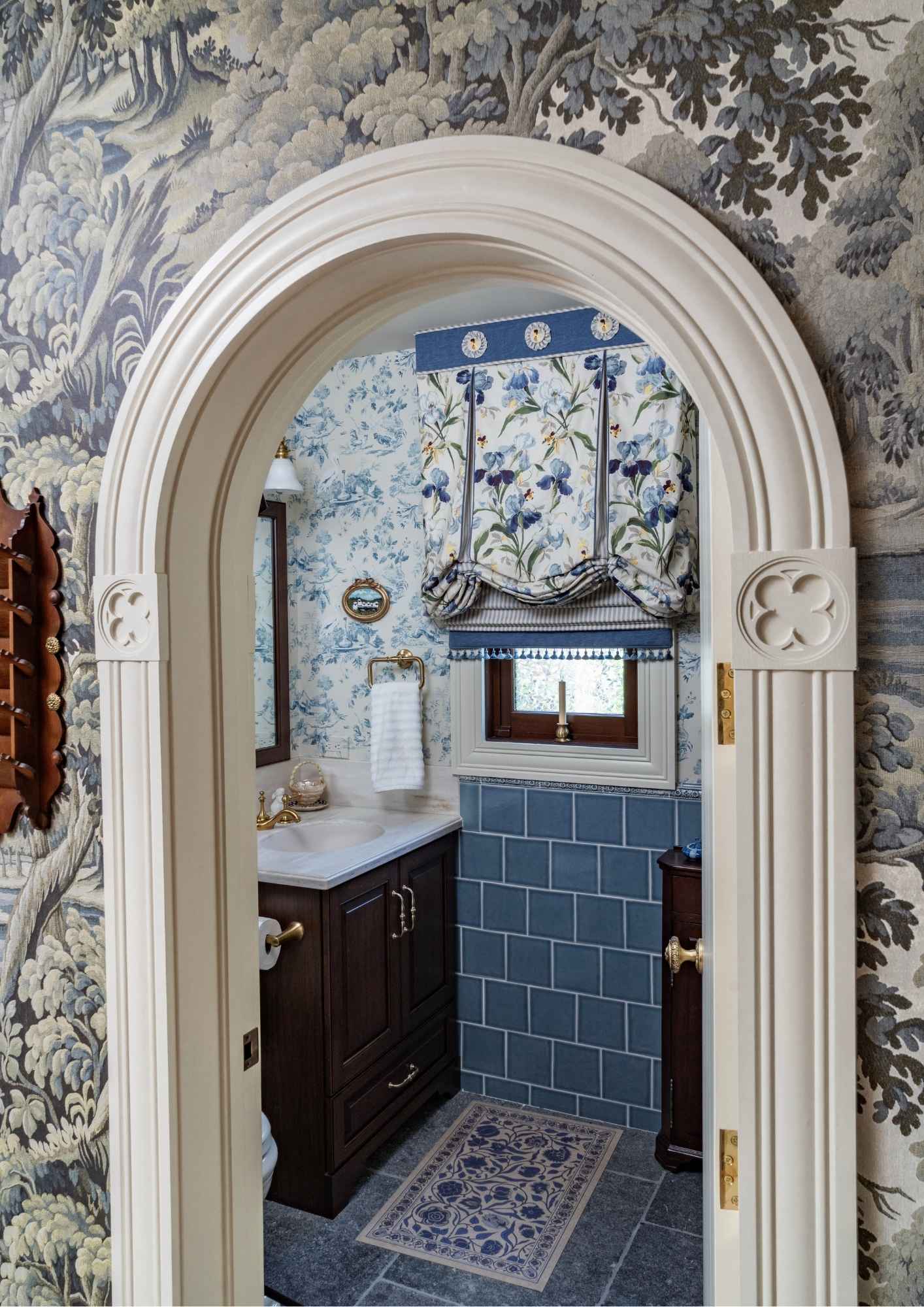
Stack five or six fabrics into a single window and one crooked seam or uneven trim line will throw off the whole room. There was nowhere in this house for a shortcut to hide, and that suited me just fine.
If you’re working on a project that refuses to play it safe and calls for this level of design and detail, I’d love to be part of it.
Let’s talk about what bold could look like in your own home.